A Review of the Request Lovely Typeface
The moment of choosing a font for a publication’s new identity is always a quiet, decisive one. Recently, while redesigning the header for a lifestyle newsletter, I found myself scrolling through countless display fonts, searching for that specific blend of elegance and warmth. The goal was to instantly convey a curated, thoughtful mood without feeling stiff or overly formal. It was in this search that I encountered Request Lovely, a display font that immediately stood out for its particular charm.
Request Lovely for Editorial Mood and Publication Identity
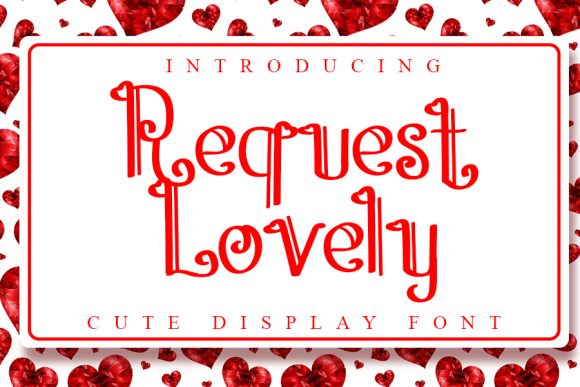
Request Lovely is, as its description notes, a magical and romantic display font. Its visual character is defined by a gentle, flowing rhythm with soft curves and a consistent baseline that gives it a refined stability. This isn't a wildly erratic script; it’s a font with personality that feels deliberate and welcoming. The mood it sets is unmistakably romantic and sophisticated, which makes it a powerful tool for establishing a publication's identity. For that newsletter header, using Request Lovely transformed a simple text into an elegant promise of the content within, signaling a space for beautiful stories and calm inspiration.
In editorial design, a display font acts as a visual anchor. Request Lovely excels in this role for publications targeting audiences interested in beauty, celebration, and personal growth. Imagine it on the cover of a wedding guide ebook, the title of a recipe collection focused on gatherings, or the chapter opener in a coaching workbook about nurturing creativity. The font supports a cohesive identity by carrying its romantic tone across all these touchpoints, creating a consistent and recognizable visual language for your brand.
Using Request Lovely in Real Content Layouts
Testing a font in real layouts is the only way to understand its practical value. I applied Request Lovely across several common publishing formats. For blog headers and article titles, it commands attention without shouting. In a digital magazine layout, it worked beautifully as a feature page title, introducing a long-form piece on artisan crafts with appropriate grace. Its application in pull quotes was particularly effective; a sentence lifted from the body text and rendered in Request Lovely became a decorative accent that encouraged pause and reflection, enhancing the reader's engagement with the content structure.
This font is clearly designed for prominent, decorative use. It looks stunning on wedding invitations and thank you cards, as the product details state, and that same quality translates perfectly to editorial uses like greeting cards, quotes, and logos within a publication's ecosystem. For a printable planner or a course PDF, using Request Lovely for section headings and cover text creates an immediate sense of quality and care. However, it is not suitable for body copy, small captions, or dense paragraphs. Its expressive nature would hinder readability at small sizes and in long blocks of text. This is a font for accents, titles, and intentional moments of visual emphasis.
Request Lovely Font Pairing for Readability and Hierarchy
Any expert review of a display font must consider its partnership with other typefaces. Request Lovely, as a romantic and somewhat script-like display font, needs a strong, readable counterpart for body text to ensure clear visual hierarchy. In the newsletter project, I paired it with a classic, neutral serif font for the articles themselves. This combination allowed the header to shine emotionally while the main content remained effortlessly readable. For a recipe ebook, one might pair Request Lovely with a clean, modern sans serif font for ingredient lists and instructions, ensuring the decorative titles don’t compromise practical clarity.
This thoughtful pairing is crucial for supporting both audience engagement and readability across platforms. Whether the final product is viewed on a screen, in a mobile layout, or as a printed PDF, the combination of an expressive display font like Request Lovely with a functional text font creates a balanced and professional reading experience. The display font draws the eye and sets the mood, while the body font carries the reader comfortably through the content.
Practical Considerations for Publishing with Request Lovely
Before committing to a font for any publishing project, practical checks are necessary. For Request Lovely, one should verify the included styles, weights, and any special features like alternates or ligatures that can add uniqueness to titles or logos. Understanding its multilingual support is key if your audience is global. Most importantly, confirming the commercial font licensing terms is essential for bloggers, ebook creators, and digital product sellers. Can it be used in templates you sell? In client publications? In your paid newsletter graphics? A font is a design asset, and its license must align with your use.
The file formats provided should also suit your technical workflow—whether you’re designing in common graphic software, embedding fonts in web-based publishing tools, or preparing files for print. These details ensure that the romantic elegance of Request Lovely can be seamlessly integrated into your actual production process, from initial concept to final distributed PDF or published web page.
Where Request Lovely Elevates Content and Where It Steps Back
In final assessment, Request Lovely is a specialist. It elevates content precisely where you want to inject romance, magic, and a soft sophistication. It is ideal for blog headers, magazine covers, ebook titles, newsletter graphics, chapter openers, pull quotes, and any branding element for a publication focused on lifestyle, weddings, wellness, or creative pursuits. Its strength is in crafting an immediate emotional connection with the reader, defining the publication's identity from the very first glance.
Conversely, it should step back in layouts requiring formal austerity, dense information, or purely functional communication. It would feel out of place in a financial report, a technical manual, or a news publication with a neutral tone. This is not a limitation, but a clarification of its niche. For the right project, choosing Request Lovely means choosing a specific mood and audience experience. It compels a purchase or download when you see your project’s needs align perfectly with its offering: a beautiful, romantic display font ready to transform your titles, invitations, quotes, and logos into moments of lovely design.
For the independent content brand, the author designing their own ebook, or the blogger refining their visual voice, a font like this is more than a tool; it’s a collaborator. It brings a distinct personality to your words, helping structure your content with visual cues that are both beautiful and intentional. In the calm space of editorial design, where every choice impacts how a story is received, Request Lovely offers a reliably elegant hand.